
Every AI, one glance away.
Where it started · concept film · 2:55
Vox Amelior, my first app: an AI that listens, remembers and answers on your phone, so your conversations stay there. Its listening now runs in the glasses app too. The film shows what it could do for you; most of it runs in the app today.
Concept commercial for Vox Amelior, 2 minutes 55 seconds, with quiet music and no narration. A transcript is available below the video.
Transcript
Soft piano and ambient music throughout; no narration.
On an average day, we speak about 16,000 words. Most of them slip away.
Except our words online. Those, they keep. The screen fills with them: searches like “is this rash serious” and “why do we keep fighting”, things we typed like “I’m fine, really.” and a card number, and the videos that held our attention, like “10 signs you’re burned out”, watched three times. Now AI is in your search, your inbox, your photos. All of it can be stored on servers we’ll never see, read by people we’ll never meet, and sold to companies we’ve never heard of. Our words. Their rules.
Take your words offline. Start here. It listens on your phone, thinks on your phone and remembers on your phone. It works in airplane mode. Encrypted: 256-bit, by Android, keyed to your passcode. Sealed: other apps can’t read it, and there are no cloud backups. Never sent: no server holds a copy to breach. You can’t leak what you never send. Your words. Your phone. Your rules.
Now let your words work for you. What you heard, when you need it: “What did Jordan say I shouldn’t forget?” The plumber, Thursday at 9; cake pickup by 5; your mom’s birthday is Sunday. “What do we need from the store?” Eggs and the good bread; you still have milk.
At bedtime, Milo, age five, says: “When I grow up, I want to be just like you.” Years later, on a hard day, you ask what he said, and it’s there. Worth living up to.
So ask about the voice you hear most. Yours. “Which words do I use incorrectly?” “That plan is ingenuous”: ingenuous means naive; you meant ingenious. “When did I sound sharpest? Why?” Thursday’s pitch; you’d rehearsed it out loud the night before. “What thinking traps do I fall into?” All-or-nothing: “always” and “never”, 23 times in arguments. “Who did I thank this week?” Dana, twice. Jordan, not once. “What have I promised and not done?” Call Mom back; you’ve said “this weekend” three times. “Honestly, who starts more of our fights: me or Jordan?” You, six to five. “Want to know who apologizes first?” “Not today.”
Three months later: “Who starts more of our fights now?” Hard to say; there haven’t been many. Heated moments down 60% and laughter up 35% since spring. And you called Mom. Every Sunday.
Your voice, to better your life. The words fall away and become the name: Vox Amelior. Free for Android.
Concept film. People, conversations and answers are examples. Listening, speaker recognition, Ask, reviews and Insights run in the app today. Encryption is Android’s own, standard on phones launched with Android 10 or later. Let people know when it’s listening.
AI gets better every month. The way we reach it hasn’t: a text box, on a phone, in your hand. So I find the best new open software and wire it into one interface you wear: glasses that show any AI, a phone that hears and remembers, voices that read to you. When the next AI ships, from any company, it already has a place in your glasses.
- Open-source Android apps with public builds
- 4
- Open models and libraries working together in Vox
- 15
- Years in telecom and fiber before software
- 7
01 · Your screen, anywhere
Your computer, at home or at the office. In your glasses, wherever you are.
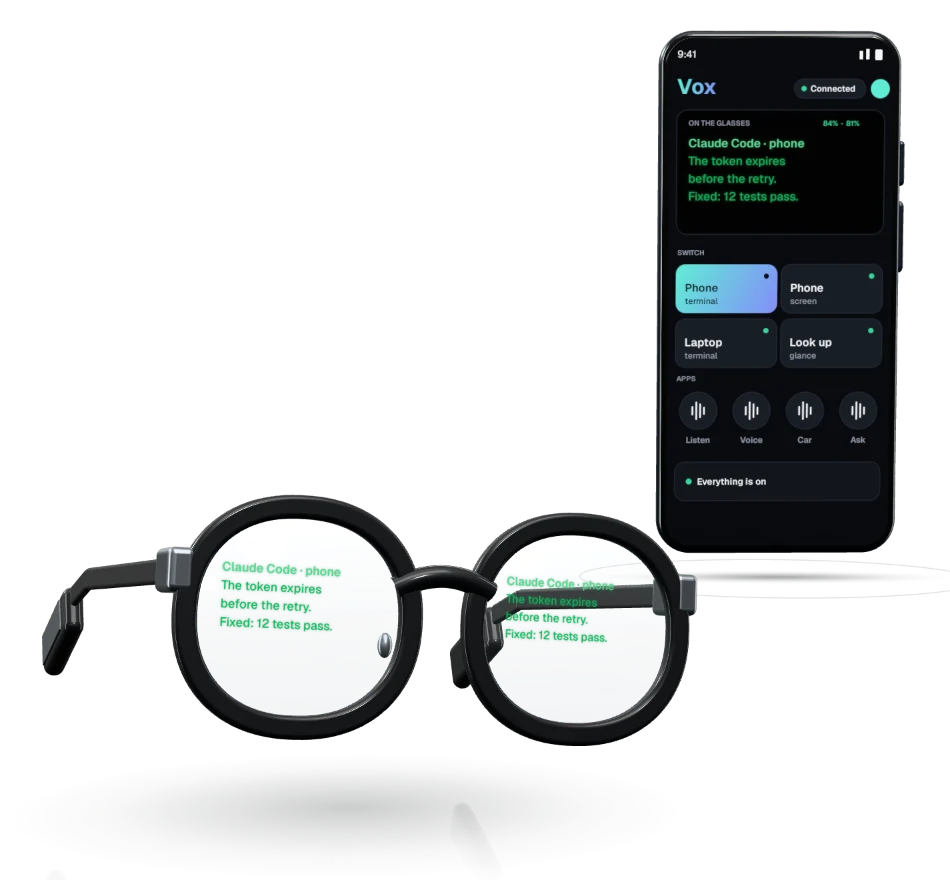
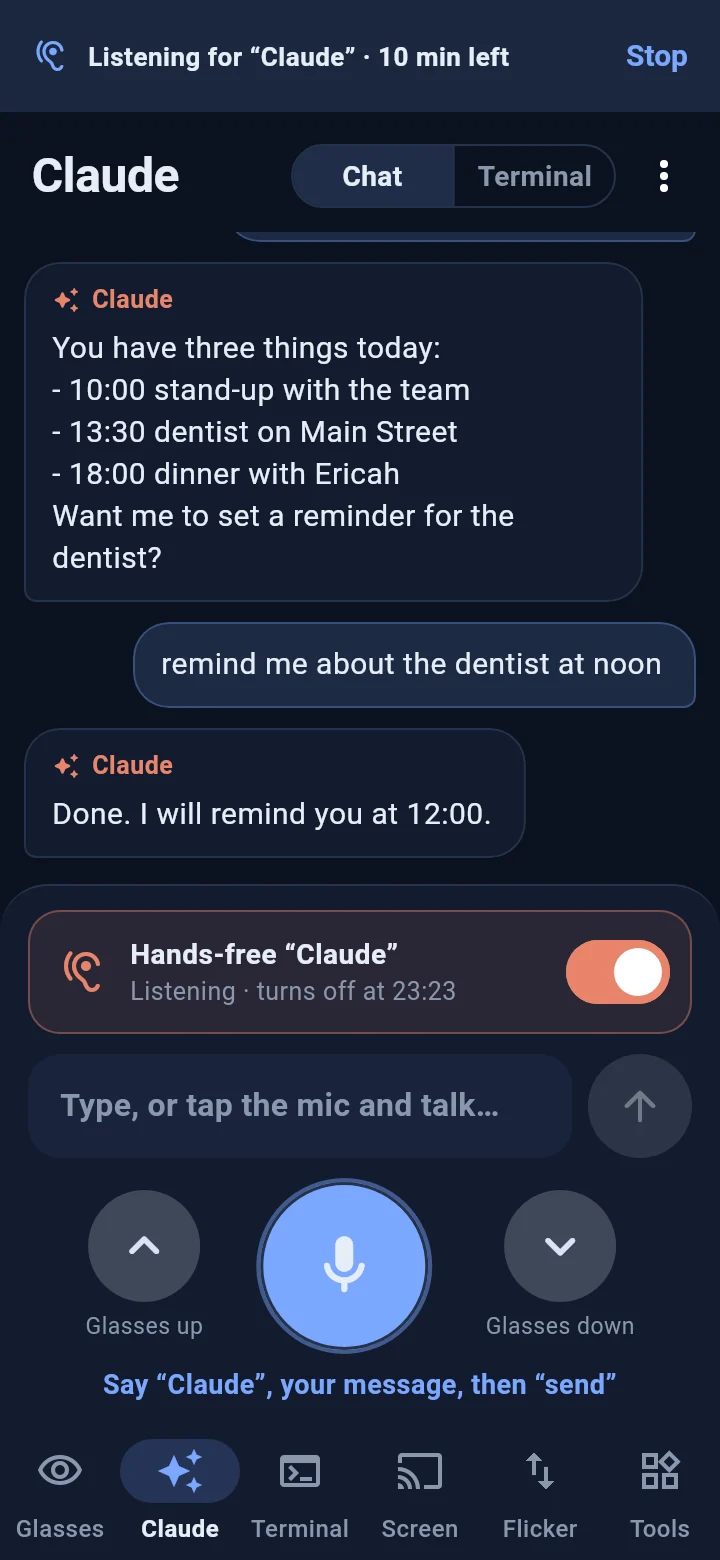
Vox reaches your own computer over SSH inside Tailscale, a private network where every connection is encrypted and nothing on your computer is open to the internet. mosh keeps the session alive as your phone moves between Wi-Fi and cell. Its terminal, with Claude Code building whatever you ask, or its whole screen shows in your glasses.

02 · The idea
One interface. Any AI.
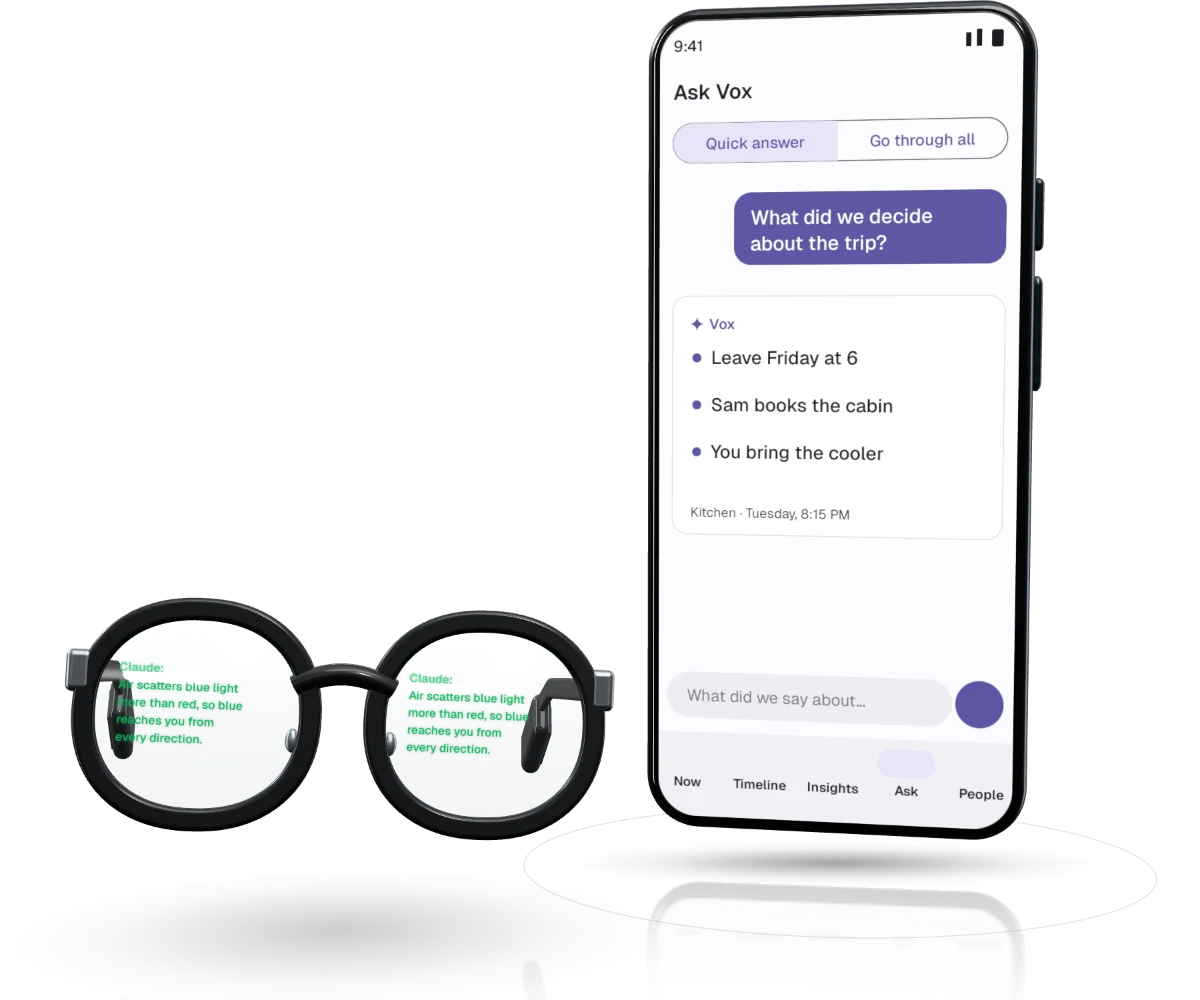
Reaching AI shouldn’t mean stopping to type. I’m building the way around the text box, one sense at a time: it shows you, it hears you, it speaks to you. Each piece is made from the best open software I can find, and each one hands back a choice the usual apps make for you.
-
01 · Shows you
Vox
Turns Even Realities G1 glasses into a second screen for any AI: Claude Code, your phone, your laptop, live captions.
Your choice: which AI is in your glasses.
The glasses app -
02 · Hears you
Vox Amelior
Listens and remembers on your phone, then helps you hear yourself. Your conversations stay on the phone.
Your choice: what stays private.
The memory app -
03 · Speaks to you
Narrator Studio
Turns whatever you decide to read into a podcast, in natural voices made on your phone.
Your choice: what fills your ears.
In other apps
03 · New · Vox · Android + Even Realities G1
A second screen for every AI.
Smart glasses usually come locked to one maker’s apps. ScouterKit, open-source firmware by Marek, unlocks the G1’s whole 640 × 480 display at up to 30 frames a second. On top of it I built Vox, the Android app that makes those lenses a screen any AI can use.
- Any terminal AI
- Claude Code in your glasses, on the phone or a laptop. Any AI with a command line works the same way.
- Any app
- Your phone’s screen, or your laptop’s, mirrored and tuned to read well on the lenses.
- Your voice
- Speak into the glasses’ microphone; NVIDIA Parakeet, on the phone, types it into any prompt.
- The room
- Live captions and an all-day transcript that knows who’s speaking, carried over from Vox Amelior.
- On the road
- Ask Claude from the steering wheel. The answer is read aloud; the lenses stay dark while you drive.
- At a glance
- Look up for the time, the weather, your next event and the notifications that matter.
If it runs on your phone or in a terminal, it can be in your glasses. The next AI needs no new app to get there.
In
- Claude Codeany terminal AI · SSH + mosh
- Any phone appthe phone’s screen
- A laptopits screen or terminal
- Your voicethe glasses’ microphone
- The roomthe phone’s microphone
Vox · Android
One phone, every model
- Parakeet · speech
- WeSpeaker · who
- LFM2.5 · thinks
- EmbeddingGemma · finds
- Kokoro · speaks
- Screen encoder
One shared microphone. Models take turns; what’s heard waits on disk.
Out · Even Realities G1
- Bluetooth LEboth arms at once
- 640 × 480per eye, up to 30 fps
- ScouterKitopen firmware, programs on each arm
- Look up to see itdark until you glance
How I build
Find it. Fit it. Ship it.
Better open software ships every month. The work is knowing which pieces win, and making them run together on a phone you carry all day.
-
01 · Find
I test the candidates on a real phone and keep what wins: Parakeet for speech, Liquid’s LFM2.5 for thinking on the phone, Kokoro for voices.
-
02 · Fit
Then I make them share one phone: one microphone for every feature, a queue on disk so nothing said is lost, models that take turns instead of fighting for the chip.
-
03 · Ship
Every change builds in the open and runs its tests, and the result goes on the phone and glasses I use every day.
Built on
- ScouterKit
- sherpa-onnx
- NVIDIA Parakeet
- Silero VAD
- WeSpeaker
- pyannote
- SenseVoice
- llama.cpp
- Liquid LFM2.5
- EmbeddingGemma
- Kokoro
- Whisper
- mosh
- JSch
- LC3
- Copilot In testingClaude hears a meeting with you and cues an answer, in your glasses, only when a question needs you.
- Podcasts In testingNarrator Studio’s voices inside Vox: any text, read aloud in several voices.
- Tools for AI NextAny AI can search your day, put a note in your glasses or set a reminder.
04 · Where it started · Vox Amelior · Android
A private memory for your conversations.
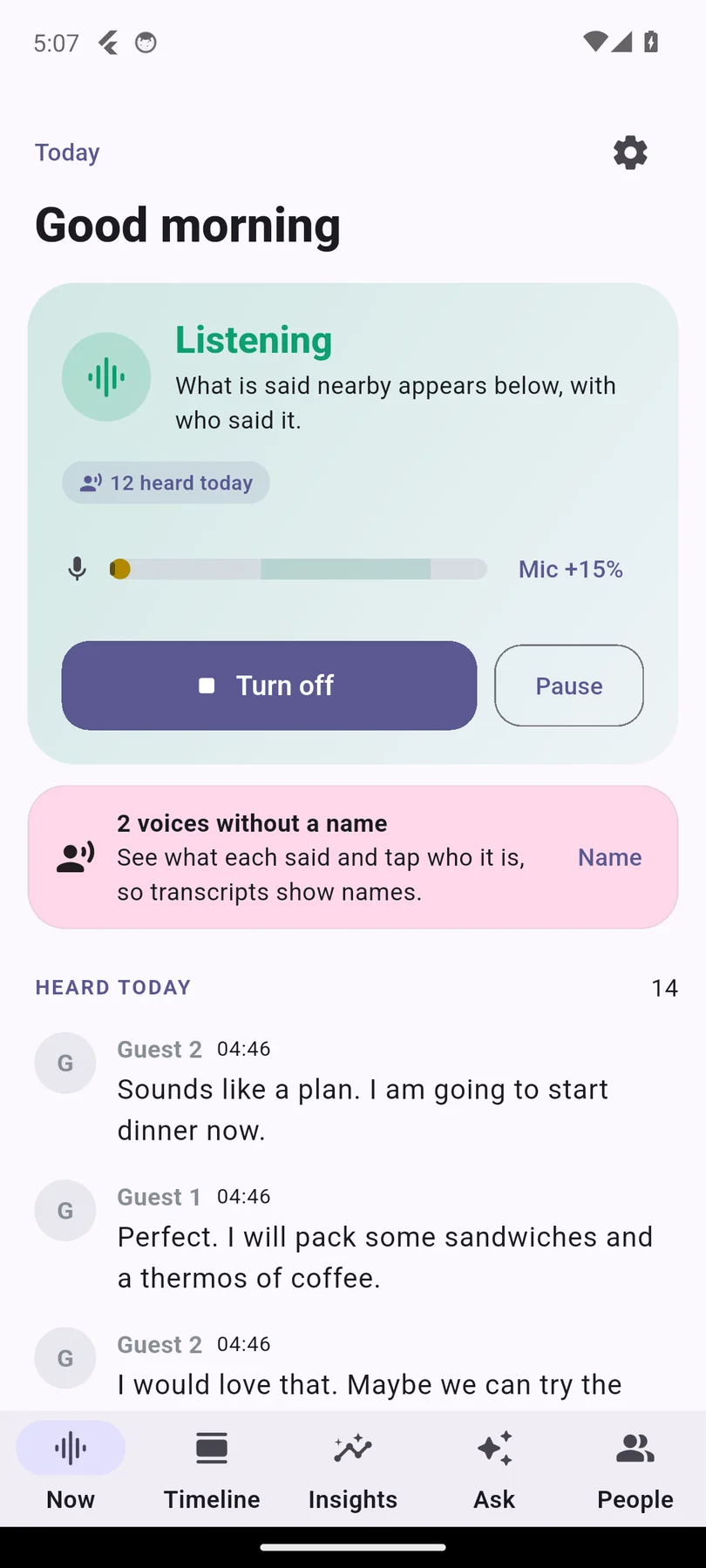
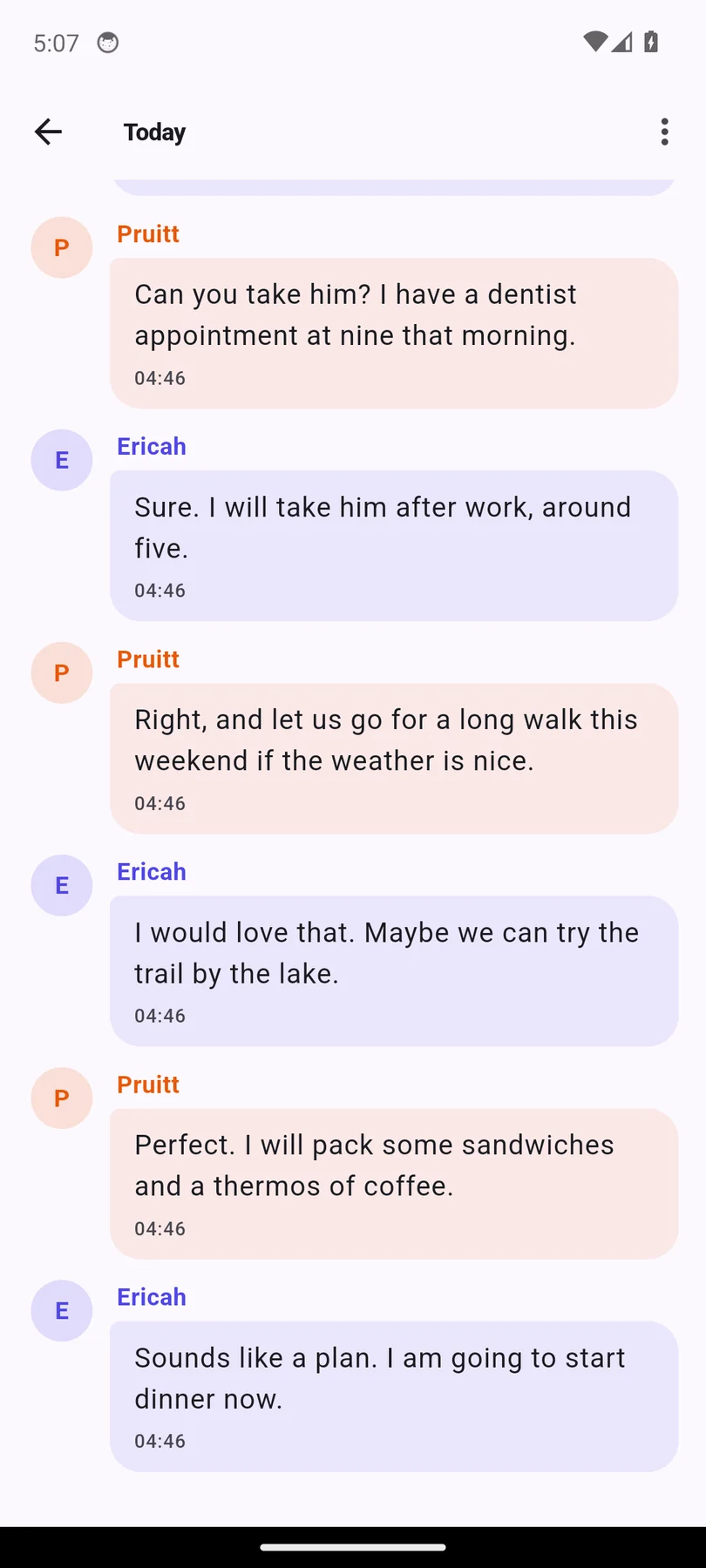
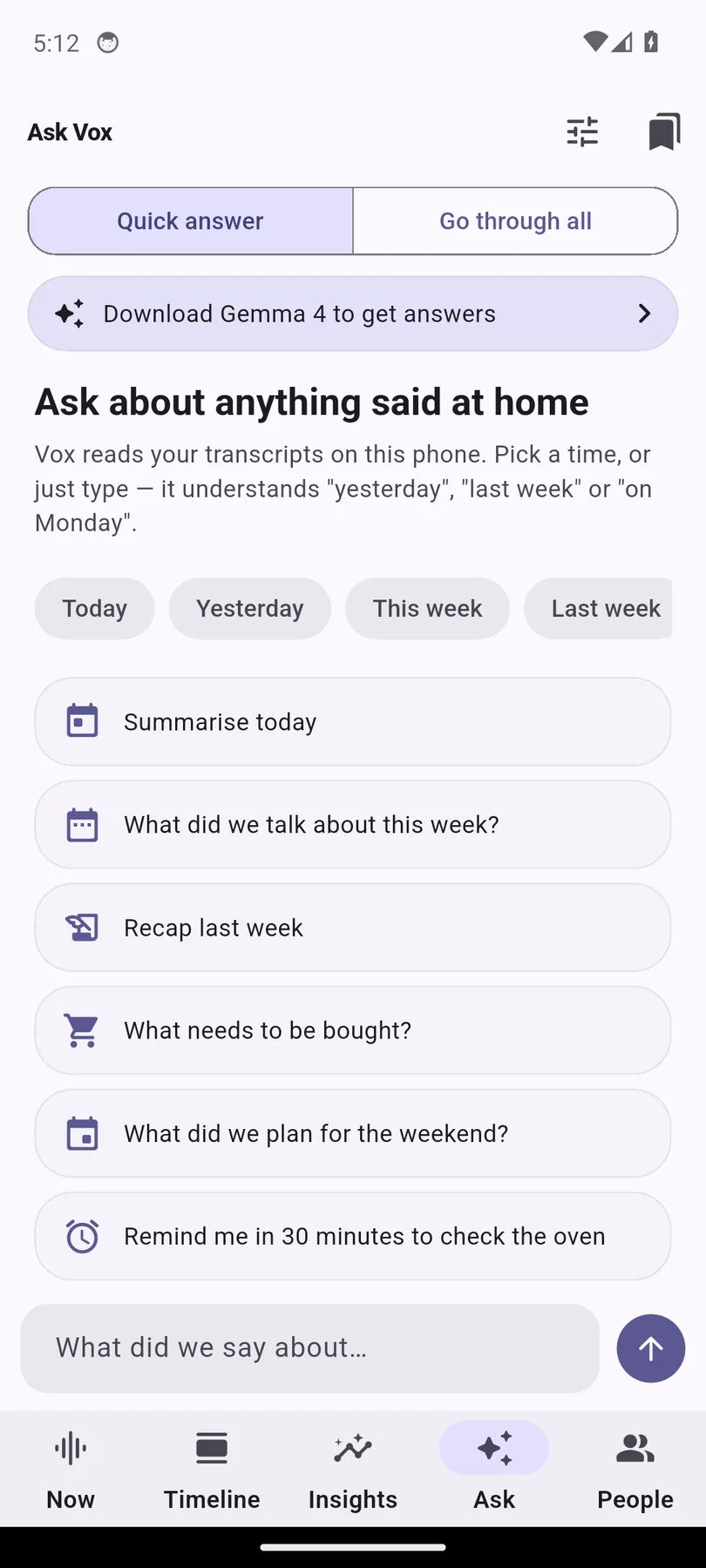
It writes down what’s said nearby, learns who’s speaking and answers when you ask. Then it does something a feed never will: it helps you hear yourself. Its listening is what Vox now brings to the glasses.
- Remembers
- Speech to text and speaker recognition, on the phone (NVIDIA Parakeet, TitaNet).
- Answers
- Ask in plain words; a local language model and search by meaning find it.
- Reviews
- Promises, kind words, logical fallacies, or any question you ask about your own words.
- Stays yours
- No cloud AI and no analytics. Private storage under Android’s encryption, kept out of cloud backups.
- 400+ automated tests
- Release build tested on an emulator with the real models
05 · Other apps
Two more ways in.
They came first, and they still ship: the first app to put Claude in the G1, and the studio whose voices now read inside Vox.
Even Suite · Android + smart glasses
Private when it can be. Powerful when you need it.
Claude in your Even Realities G1 glasses on their own firmware, for the questions where accuracy matters most.
See Even Suite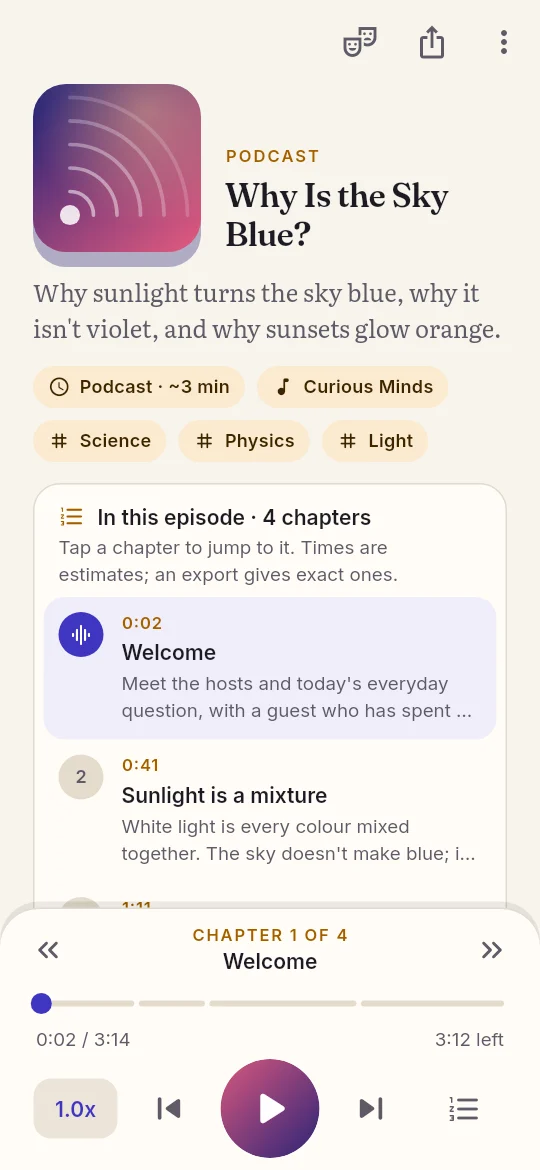
Narrator Studio · Android
What you hear shapes how you think. So choose it.
Any text or PDF, turned into a podcast in natural voices, made on your phone.
See Narrator Studio06 · Hiring?
Let’s talk.
I’m looking for full-time work on how people reach AI: on-device AI, wearables, voice and AI products. What I bring is the habit behind this site: find the best new software early, then make it work for people. Before software I spent seven years in telecom and fiber. More about me.
- Focus
- On-device AI, smart glasses, voice, AI products
- Builds in
- Kotlin, C++ over JNI, Flutter and Dart, Python
- Runs on
- sherpa-onnx, ONNX Runtime, llama.cpp, LiteRT-LM, Bluetooth LE
- Background
- 7 years in telecom and fiber · M.S. Software Engineering, AI
- Status
- Open to full-time roles · Casa Grande, Arizona